
Dual 2-Input XOR Gate: An Analysis of NXP 74LVC2G86GT in Modern Circuit Design
The XOR (Exclusive-OR) gate stands as a fundamental building block in digital logic, indispensable for applications ranging from basic arithmetic to complex data encryption. At its core, the XOR gate outputs a HIGH logic level only when its two input signals are different. The integration of two such independent gates into a single package, exemplified by the NXP 74LVC2G86GT, represents a significant advancement in achieving higher circuit density and performance in modern electronic design. This article delves into the technical attributes and application landscapes of this pivotal component.
The 74LVC2G86GT is a member of NXP Semiconductors' renowned LVC (Low-Voltage CMOS) family. This family is engineered to operate at low voltage levels, typically from 1.65 V to 5.5 V, making it exceptionally versatile for interfacing across a wide spectrum of logic levels in mixed-voltage environments. A key feature of this technology is its very low power consumption, a critical parameter for battery-powered and portable devices where energy efficiency is paramount. Furthermore, the LVC family is celebrated for its high noise immunity and robust output drive capability, ensuring signal integrity even in electrically noisy operating conditions.
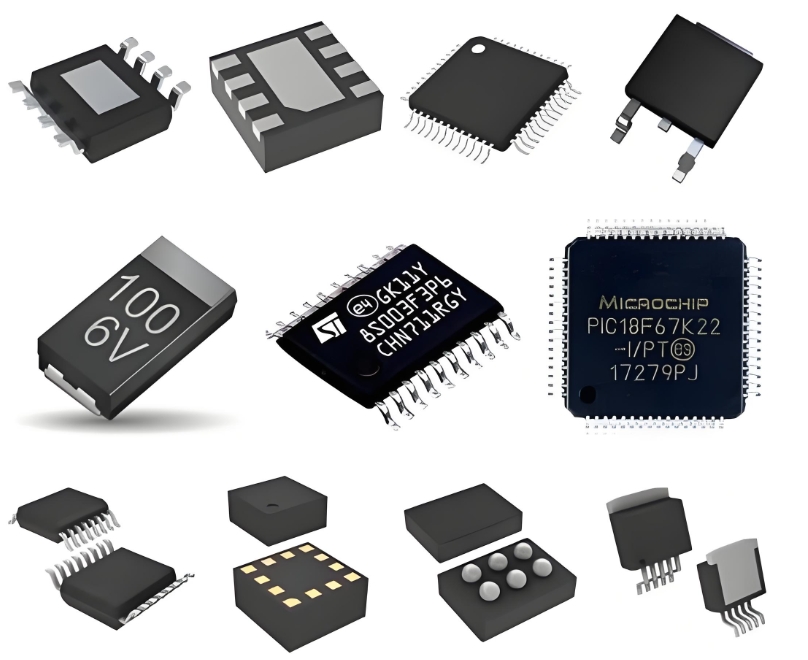
Housed in an ultra-miniature package, such as the 8-pin XSON, the dual-gate configuration of the 74LVC2G86GT offers a dramatic reduction in PCB (Printed Circuit Board) footprint. This miniaturization is crucial for the design of space-constrained applications like smartphones, wearables, and IoT (Internet of Things) sensor nodes. By incorporating two gates in one package, designers can simplify board layout, reduce component count, and lower overall assembly costs.
The utility of this dual XOR gate extends across a diverse array of circuit functions. Its most classic application is in the construction of binary adder circuits, where it forms the essential sum generator. Beyond arithmetic logic units (ALUs), it is instrumental in building:
Parity Checkers and Generators: Used for error detection in data transmission and storage systems.
Voltage-Controlled Oscillators (VCOs): Serving as a core component in Phase-Locked Loops (PLLs) for frequency synthesis.
Comparators and Phase Detectors: Determining if two digital signals are in or out of phase.
Programmable Inverters: Where one input pin can be used to control whether the signal on the other input is inverted or passed through directly.
The high-speed operation of the 74LVC2G86GT, with propagation delays in the nanosecond range, ensures that it can meet the timing requirements of today's high-frequency systems without introducing significant latency. This speed, combined with its low-voltage operation, makes it a future-proof choice for next-generation digital designs.
ICGOODFIND: The NXP 74LVC2G86GT dual XOR gate encapsulates the ongoing trends in semiconductor technology: miniaturization, low-power operation, and high-performance integration. It is not merely a simple logic gate but an enabler of complex, efficient, and reliable digital systems, proving that even the smallest components are vital to the architecture of modern electronics.
Keywords: XOR Gate, Low-Power CMOS, PCB Miniaturization, Mixed-Voltage Interface, Signal Integrity

