
Intel 10CX220YF672I5G: The FPGA Powering Next-Generation Edge Compute and Embedded Vision
The exponential growth of data generated at the network's edge demands a new class of processing power—one that combines high performance with exceptional flexibility and efficiency. At the forefront of this revolution is the Intel 10CX220YF672I5G, a System-on-Chip (SoC) FPGA engineered to tackle the most complex challenges in edge computing and embedded vision.
Built on Intel's advanced 10nm process technology, this device is far more than a simple FPGA. It represents a highly integrated heterogeneous compute platform. Its architecture seamlessly blends a powerful dual-core ARM Cortex-A53 hard processor system (HPS) with a large FPGA fabric featuring over 220,000 logic elements. This unique fusion allows developers to architect their systems with precision: the ARM cores can run a rich operating system like Linux and manage control-plane tasks, while the FPGA fabric accelerates critical, real-time data-path and algorithm functions in hardware. This heterogeneous computing architecture eliminates data movement bottlenecks, a key advantage for latency-sensitive applications.
For embedded vision, the Intel 10CX220YF672I5G is a game-changer. It integrates hardened intellectual property (IP) blocks that are essential for high-speed sensor interfacing and video processing. This includes MIPI CSI-2 controllers for direct connection to modern image sensors and hardened video codecs for efficient compression and decompression. The programmability of the FPGA fabric allows for the implementation of custom, real-time image processing pipelines—such as object detection, semantic segmentation, and image stabilization—that would be impractical or too power-hungry for a traditional CPU. This enables real-time, intelligent decision-making at the very edge.
In broader edge compute applications, from industrial automation to telecommunications, this FPGA shines. Its ability to interface with a vast array of protocols and sensors makes it ideal for aggregating and pre-processing data from multiple sources. More importantly, it can perform hardware-accelerated inferencing for lightweight AI models, enabling smart capabilities without relying on a cloud connection. This ensures lower latency, enhanced reliability, and improved data privacy. Furthermore, the device's support for error-correcting code (ECC) memory and functional safety features makes it a robust solution for even the most demanding industrial environments.
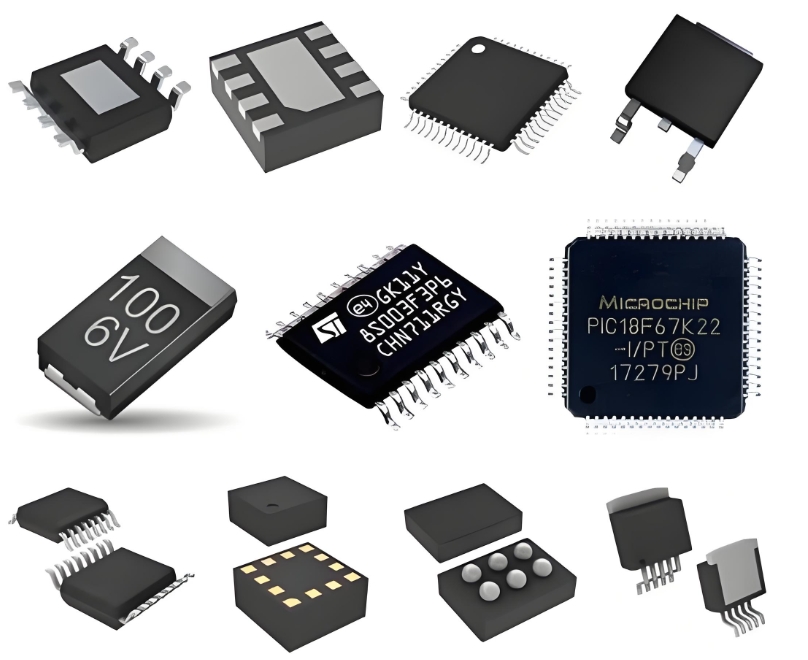
ICGOOFIND: The Intel 10CX220YF672I5G is not merely a component; it is a foundational technology for the next wave of intelligent edge systems. By merging a high-performance FPGA fabric with an ARM-based processor system and critical hardened IP, it delivers the unparalleled flexibility, processing power, and efficiency required to turn vast streams of edge data into immediate, actionable insight.
Keywords:
FPGA
Edge Computing
Embedded Vision
Heterogeneous Architecture
Hardware Acceleration

